
Whiplash and the Alexander Technique
Sometimes you can't free your neck on your own...

I might have a problem brewing… I’ve discovered that making dumplings isn’t really that hard or that time consuming once you buy frozen dumpling wrappers. Did you know you can put ANYTHING into one of those little wrappers and then you can boil them and eat them? It’s basically just making meatballs (or foodballs if it’s not meat) and wrapping them in dough.
No longer am I confined to just having chicken or beef or shrimp or vegetable. Want a carrot and cabbage dumpling? No problem. Curried pork, beef, and chive? Of course! And worst of all it’s not even unhealthy unless you eat 30 of them. And I couldn’t possibly pull that off, could I?
Whiplash
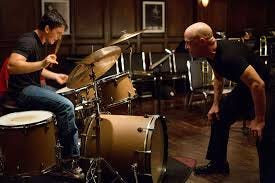
Two weeks ago, one of my long time students, Becca Berlind, was hit by a car while biking in Brooklyn. While biking to her lesson with me, a car failed to stop at an intersection and hit her. She remembers flying over the handlebars, landing on her bum first, and then hitting the ground - somehow - with the rest of her body. She is alive and has no broken bones, torn ligaments, or brain injury. The EMTs and doctors have no idea why the damage is as minimal as it is. They consider this miraculous.
This is a traumatic event. She has whiplash, staples in her head, and bone bruising in the tailbone. When we first spoke on the phone after the accident, she was quite distraught and said that her head felt very heavy and immobile. She attempted to do a lie down and allow her neck to release but she could not get comfortable and nothing happened.
This is because her entire system is in a state of shock. The muscles throughout the entire body have either partially or entirely frozen. And with such rampant pain information constantly flowing about her system, she had absolutely no way of finding comfort and relaxing. After a few visits to the doctor, they discovered that she had an infection around the staples in her head and they treated this appropriately.
I’m sharing this information with you because:
It is important to ask for help from physicians
It is important to voice and re-voice an issue if something feels wrong (infections are not necessarily caught immediately).
It is important to do the appropriate paper work with doctors, insurance companies, the police, and lawyers in such events.
All of this might amount to common sense to you, but when you are injured you are in a state of shock and do not necessarily grasp the importance of it all. Becca has checked all of these boxes and the unfortunate news is that since her injuries have been classified as minor and since her lost wages from employment are not exactly at the level of a corporate attorney, her lawyer(s) have advised her that there’s not enough money at stake to sue the driver and get compensation.
Plotting a Course of Action
Traditionally, someone like Becca would go to physical therapy 2-3 times per week for a few months. Some folks respond well enough to this approach and will report decreased pain symptoms and return to work/normal activities. Other folks don’t get better and complain of pain for their entire lives. In Becca’s case, she’s already had about 100 Alexander Technique lessons with me. She understands the system fairly well, trusts my hands, and doesn’t want to try and adapt to the system of physical therapy.
The question that is of interest to me is, “What course of action will maximize Becca’s chances of recovering from whiplash?”.
The only way I could help her with this was to have her come in and give her an Alexander Technique lesson. Fortunately, the technique is so non-invasive and conservative that the risk of me injuring her is practically zero. Alexander Technique teachers should never move someone without feeling release/consent and never try to force a stretch reflex1.
Table Work + Whiplash
When Becca came in for her lesson, she was unable to lie flat on her back due to the bruising in the tailbone and stitches in the back of the head. We took a little time to find the right level of cushions to enable her to be as nearly on her back as possible without sensing anything in pain. It was a bit of a trial and error process, but once she was marginally comfortable we could begin to work.
Taking advisement from Beret Arcaya (I will take any advice I can get to be a better teacher), I almost exclusively worked with Becca’s head, neck, and upper back at a very slow tempo. This work began in my case by simply placing my hands on the back of the neck so that I could feel the degree of bracing. I absolutely did not attempt to massage anything, anywhere. Very slowly, Becca showed me where the cuts and staples in her head were and I did my best not to touch the affected areas.
I would say that the entire first lesson was an exercise in learning how to not aggravate the wound while finding a way to place my fingertips on the base of the skull. Once my hands could safely touch the base of the skull, I was able to feel the muscles of the neck soften and release. With this release, I was able to help open up some space in the atlanto-occipital joint and help the head feel lighter.
After helping Becca come up off of the table, she could feel much more lightness and mobility in the head, but she could also feel how the head wanted to crash heavy again into the neck. For me, the sensation of temporary lightness is a great indicator that Alexander Technique lessons will help encourage release and restore a calm sense of mobility. As far as I can tell, she will slowly make a full recovery if she maintains a consistently high frequency of lessons for the next 2-3 months.
Ideally, I would work with her 5-6 days per week.
Next Steps
At the end of the first lesson, Becca wanted to know what stretches she should do on her own to help the neck feel better. I told her she should absolutely not make any attempt to stretch her neck. If you go through the blog archives, you will find several drawings on the musculature of the neck. Even a cursory glance will show you that there’s a very complex weave of musculature going through that area. Stretching a neck is waaaayyy more complex than stretching your calf or hamstring and can exacerbate an injury in a flash. I told Becca what I would tell anyone:
don’t push and pull on yourself
do a lie down
walk slowly.
One of the other things she did upon getting up from the table was to immediately attempt to “test” the range of motion in her neck by moving her head from left to right. She did not think of this a forcing a stretch in the neck, but it essentially amount to the same thing. I see folks do these types of “mobility tests” often after a table turn and I do my best to stop them from happening.
WTF is a Mobility Test?!?!
Essentially, there are two ways we can move our head: we can either do normal activities and let the body do whatever it does without manipulating it or we can feel like we are in rehab/mobility test mode and attempt to puzzle out what’s happening with our bodies by moving in various manners. When we are injured, it is EXTREMELY tempting to live in the mobility test mode and constantly finagle our bodies to hopefully pop them into feeling better. This mode blocks the injured areas from feeling calm; it’s like having a helicopter parent hover over a child 24/7.
After explaining this to Becca, I had her slowly walk around the room. As she turned, she kept her head, neck, and shoulders frozen and turned her body exclusively with her feet. It’s almost as if she had taken a massive insurance policy out on her head and neck and was going to protect it from harm no matter the cost.
This is not a “normal” balanced way of articulating the head and neck during a turn. I drew this to her attention to the insurance policy and asked her if she could allow the head to turn left/right in some small manner as part of her turn. This is how basically every healthy/uninjured person turns left/right. Almost immediately, Becca could feel a difference between the two types of turns.
Moving On
Over the next few months, I plan on working with Becca as often as her schedule will allow. She has so far had about 10 lessons post injury and things are improving significantly. My lessons have always been charged on a pay-what-you-can-afford basis to anyone willing to do the work and in Becca’s case I’m allowing her to pay her normal weekly rate and come in as often as she can.
This is the type of pricing policy that I have had from the beginning as a teacher of the Alexander Technique. I cannot in good conscience deny someone help if they have the right attitude and need help. So as Mikel Arteta would say, “We go again”.
If you would like to support this effort in any way, you can do something as simple as give a like to this post, share it with someone you think might find it interesting, or even consider upgrading to a paid membership of this blog. Every paid membership not only gets access to the full archive, but effectively gives financial aid to my pay-what-you-can-afford pricing scheme.
However you choose to support is GREAT. There is ZERO judgement from me; only gratitude for your continued choice to read these posts.
Does This Resonate With You?
These blogs are hopefully a way of helping you better understand yourself, how you function, and why things sometimes feel off in a general way. If these posts are helpful, I encourage you to subscribe, leave a comment, ask a question, or check out the archives for my previous articles. I like hearing from everyone and I’ll do my best to respond as I can.
Get In Touch
If you’re in NYC, you may learn more about my private teaching practice at johndalto.com.
If you’d like to book any lesson time with me, you can find my booking link here.
This does not mean that every practitioner out there is perfect, it just means that I am personally hyper vigilant about taking zero risks with another person’s health.