

What do you do when it’s cold outside?
Do you cower in fear?
Do you make sure your pipes don’t freeze?
Do you regret not owning cashmere?
Or do you buy ingredients to make french onion soup, bolognese, and escarole?
…
I think you can guess what I’ll be up to during the mini blizzard…
This Week…
The head leads and the body follows1. It’s a phrase that we use again and again in the Alexander Technique. It is used to convey the principle of efficient movement2 but it does beg the questions:
“What is leading?”
“What is following?”
How can I assess GOOD leading/following?
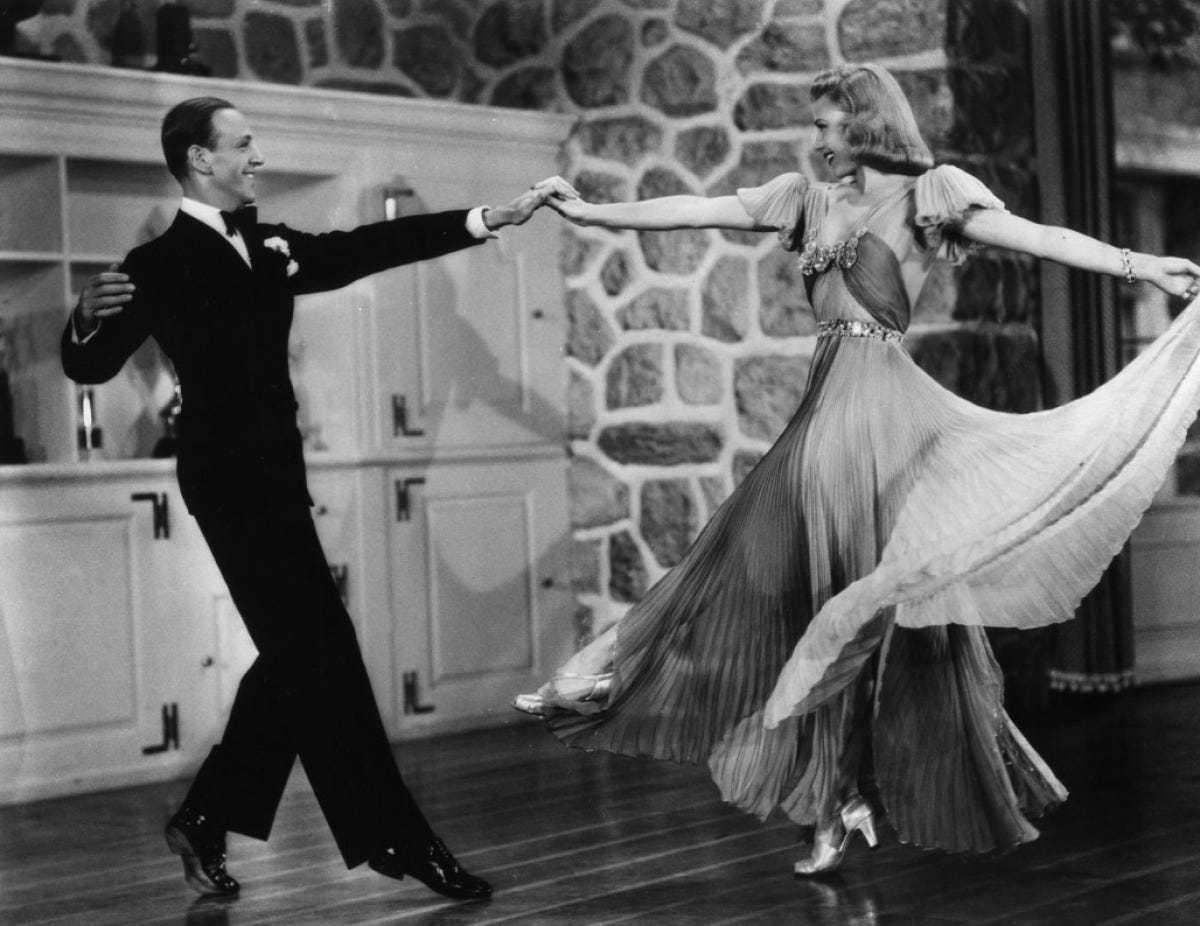
Rather than focus on the phrase the head leads and the body follows, this week I took the time with one of my students to demonstrate what it means to lead and follow in a partner dance context. During a lesson in the Alexander Technique, I will always place hands on my students and guide them through simple movements. It is their job to follow the movements of my hands and it is my job to teach them HOW to follow.
So to demonstrate leading and following with my student, I first wrote down the 3 types of timing that can exist in partner dance:
Lead + Follow in time
Lead + Anticipate/Rush the leader
Lead + Drag behind the leader
My student looked at me with a bit of a puzzled look, so I asked her to take my hands in her own and guide my arms through space (we didn’t move our feet or do anything other than simple, slow movements). She was going to lead all of my movement and I was going to follow her and demonstrate the 3 types of timing above.
At first, I followed her timing and she noted that my arms felt very light and quiet.
Then, I decided to RUSH her movements. If she moved my hands a little bit up, I would start pushing my hands up even further than her hands had taken me AND I would start to slightly move my hands at a faster velocity than hers. This involved me giving my arms a slight jerk as I increased my acceleration.
When I asked her if she could feel the difference, it was very obvious to her.
Then, I decided to DRAG her movements. As she moved her hands about, I let my arms be very heavy; like stones. I still followed her movements, but I was always very late in my response. To do this, I kind of turned myself into an obstinate zombie; half drunk and fully lazy.
She was shocked at how heavy I could make myself feel.
What I observed as the follower was that my student could lead reasonably well when she was quietly observing me. However, the faster and more randomly she moved, the harder it was for me to follow her. I felt myself getting stiff and confused and the whole dance aspect was killed. This disconnect happened when my student was leading but no longer listening/observing me; she spaced out and just did what felt fun to her.3
Three Types of Head / Body Interactions
After the exercise, I remarked that during her normal movements her upper back was dragging behind the movement of her head (and her hip was dragging behind her upper back). The result was a feeling of heaviness in the torso and stiffness in the neck. This drag in the upper back typically results in a slump.
On the other hand, I have students whose chests lead the movements of their lives. When the chest is leading we typically get a very arched back and the look of someone really puffing their chest out. This is the result of anticipation; almost as if the chest thinks it has to do all of the work for the whole body and force the person forward through life. I would suspect that the neck and mid back get an almighty jerk as a result.
How we actually achieve fluid timing between the head, neck, and all the other bits and bobs boils down to a matter of prevention. First, we must have an idea of what rushing and dragging are. Then we must start to catch ourselves doing these things in our daily lives. And finally, we must make the decision to slow down and wonder if we can change that timing.
I think it’s a bit much for today for me to try and write out HOW to get the chest out of a slump or how to get the chest to not puff out and rush. Instead, trust that it’s a HUGE DEAL if you can observe dragging or rushing within yourself. This could be in any of the examples I’ve listed above, but it could also happen when the legs rush to move and the head, neck, and torso are stuck in place when you initiate walking. The varieties are endless!
Get In Touch
If you’re in NYC, you may learn more about my private teaching practice at johndalto.com.
If you’d like to book any lesson time with me, you can find my booking link here.
Really, the neck frees so that the head leads and the body follows…
I’m ignoring events where the joints must jam up. I don’t want to study movement during car accidents…
And that’s not to say anything bad about this student. Everyone makes that mistake at some point in the learning process!!!
This description is very helpful!!